
Molly Martin from Saving Scotland’s Red Squirrels outlines recent progress in the battle to save one of our most charming creatures and explains how you can help by recording all your squirrel sightings – both red and grey.
There’s nothing quite like getting out for a good walk, and Scotland is one of the best places in the world to explore by foot. With its dramatic landscapes which drip with history and stories, and views more varied than the weather, it’s no wonder that so many of us enjoy spending our free time scrambling, stomping, squelching or strolling around in the Scottish countryside.
But for many, the highlight of a walk in Scotland is often the wildlife. And one very well-loved species is the iconic red squirrel.
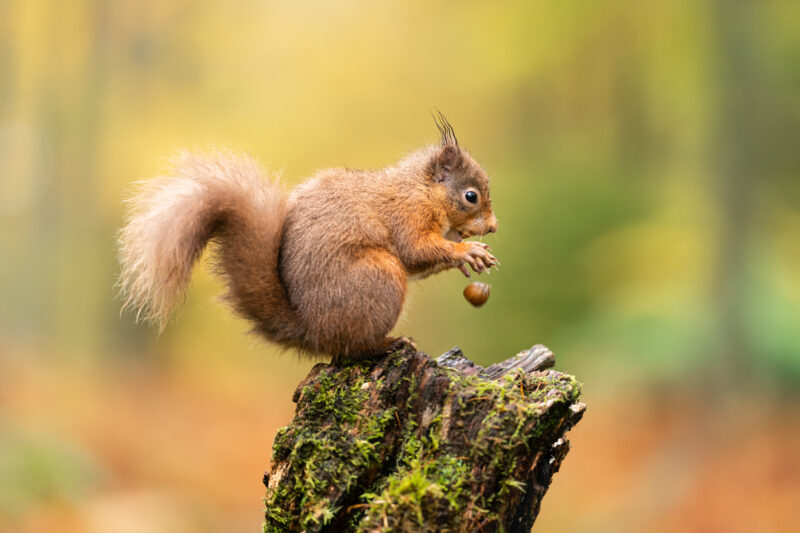
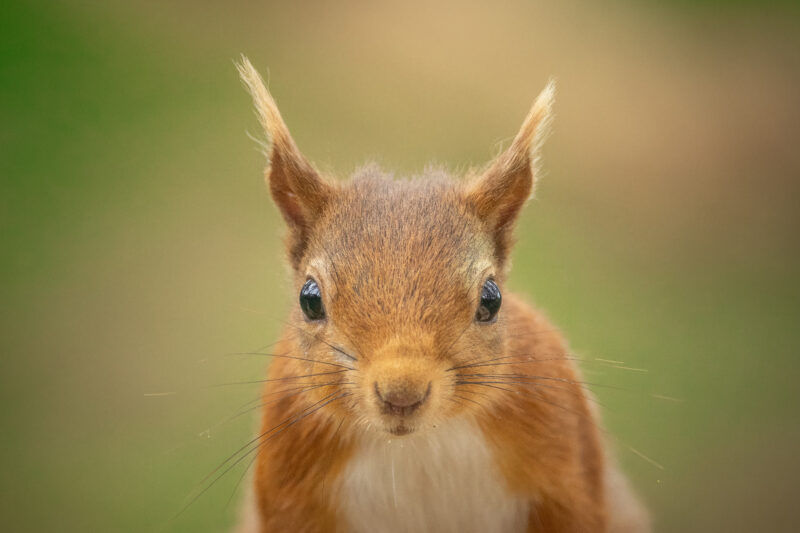
With their russet fur, tufted ears and long bushy tail, these are real characters, and they’re always a privilege to see leaping through the trees above, scampering along the forest floor or even just chattering away from the other side of a tree trunk.
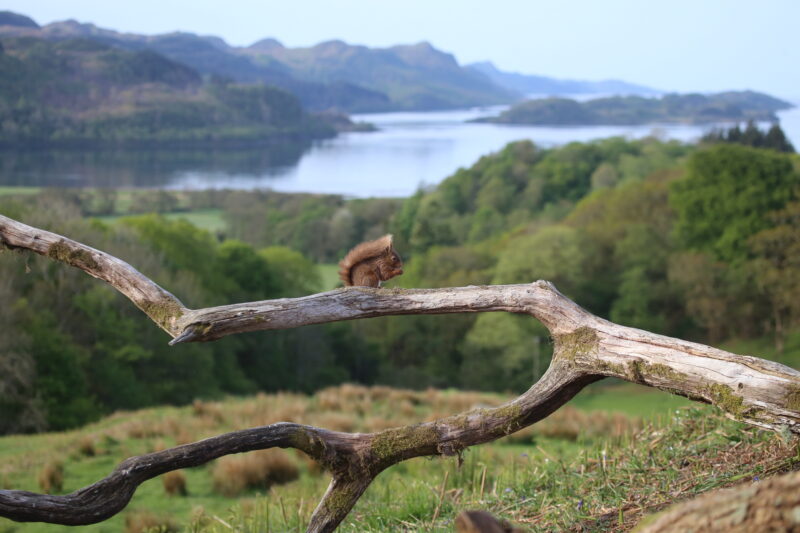
However, there is a future where red squirrels are no longer a feature of Scottish walks.
Alongside habitat loss and fragmentation, as well as climate change and road accidents, one thing threatens the survival of red squirrels above any other – invasive non-native grey squirrels.
Grey squirrels first arrived in the UK in the 18th Century, being brought over for ornamental gardens across England, and at a few sites in Scotland. They rapidly reproduced and spread throughout the countryside. This larger species of squirrel quickly replaced the native reds, through out-competing them for food and habitat. Grey squirrels have a robust digestive system, so they can eat things like acorns before they are ripe, and live in higher population densities, meaning reds are quickly left without the resources they need to live and breed in an area. Some grey squirrels also carry a virus called squirrelpox, which doesn’t affect them but is deadly to red squirrels, almost always fatal within 2 weeks of the squirrel catching the virus. Studies have shown that grey squirrels can completely replace red squirrels within 15 years of arriving in an area, and if the squirrelpox virus is present, this can happen 20 times faster.
But hope is not lost for the red squirrels! Saving Scotland’s Red Squirrels (SSRS), a partnership project led by Scottish Wildlife Trust, is working to protect red squirrel populations and expand suitable habitat for reds by removing greys. The project is a partnership between many different organisations, from conservation charities to government bodies.
Since the project was started in 2009, lots of progress has been made. SSRS works in three priority areas in Scotland: the South, the Highland Line, and the North East. These areas are where red and grey populations overlap, and are where this type of work can have the greatest impact.
In the South, SSRS staff and a network of independent volunteer groups cover all the way from Dumfries & Galloway to the Borders, protecting remaining pockets of red squirrels from constant incursions, sandwiched by grey only areas in the north of England and the Central Belt. Sadly, this is where more squirrelpox outbreaks occur, so work to combat outbreaks and raise awareness of the symptoms and how to reduce the spread is key. Thankfully, red squirrels are still thriving in many locations, and populations have recovered in areas where there have previously been squirrelpox outbreaks.
The Highland Line runs from Helensburgh to Stonehaven, along the Highland Boundary Fault. This geological feature creates a convenient physical barrier, limiting suitable routes for squirrels to migrate further north. SSRS is working along this line to prevent incursions into the Highlands, Grampians and the North East, and create more grey-free habitat south of the line to expand red squirrel habitat.
The North East team work in Aberdeen and the surrounding shire. Until the 1970s, there were no grey squirrels here, but in 1971, between 10-20 grey squirrels escaped from a petting zoo in the city. From there they bred and spread through the countryside. When SSRS was formed, there were almost no red squirrels left in the city. The grey squirrels here are an ‘island population’, meaning they’re not connected to greys elsewhere in the country. Over the past 15 years of working here, the SSRS team has managed to reduce the grey squirrel population, with only a few individuals and one breeding location thought to be left in the city. This has allowed reds to naturally repopulate and return to gardens and parks within Aberdeen. In 2025, the project recorded its first ever red squirrel at the most inner-city monitoring site.
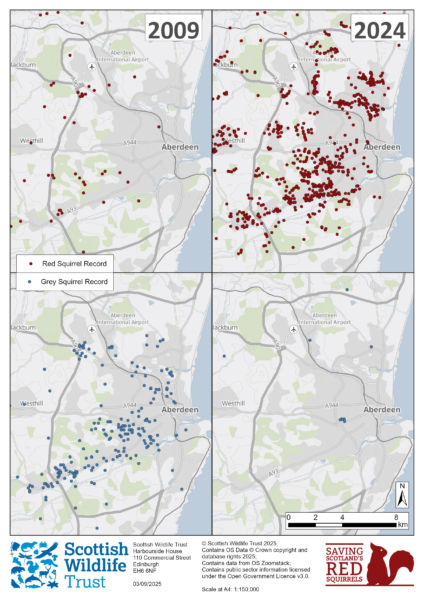
SSRS’s priority areas, and a lot of its monitoring and control work, is informed by public sightings. Anyone can submit a sighting of both red or grey squirrels from anywhere in Scotland on the SSRS website. Each sighting is verified by staff or volunteers and then added to the database. This year, the project passed an enormous milestone of a quarter of a million squirrel records collected. This data is uploaded to the National Biodiversity Network Atlas, which is open access, meaning the records can be used by other conservation organisations, research institutes, or any other groups to inform red squirrel conservation work.
Like most citizen science data, the squirrel sightings mainly come from areas where there are more people. SSRS is keen to gather data from more remote areas, as this will build a fuller picture of squirrel populations across the whole county. So, if you’re heading out on a long-distance walk, or spending multiple days exploring the wilderness of Scotland, remember to keep an eye out for squirrels, and record them on the SSRS website once you’re safely back home with your feet up and kit drying out.
Check out SSRS’s top tips for how to spot a squirrel here: How to spot a squirrel – Saving Scotland’s Red Squirrels
Record your squirrels here: Squirrel Sightings – Saving Scotland’s Red Squirrels