
Sarah Lashley, Flow Country World Heritage Site Co-ordinator, explains why we should care about the bog below our feet
The Flow Country, extending to around 400,000 hectares of Caithness and Sutherland in the north of Scotland, is considered to be the most outstanding example of an actively accumulating blanket bog landscape in the world. This exceptional landscape and its unique features resulted the highest-quality peatland and its supporting habitats being inscribed by UNESCO as The Flow Country World Heritage Site, in July 2024. It is Scotland’s only mainland natural World Heritage Site, one of just three natural sites in the UK, and is the world’s only World Heritage Site recognised for its peatland habitat. The Flow Country World Heritage Site comprises of seven discrete but adjacent areas covering approximately 190,000 ha and is managed under the umbrella of the Flow Country Partnership.
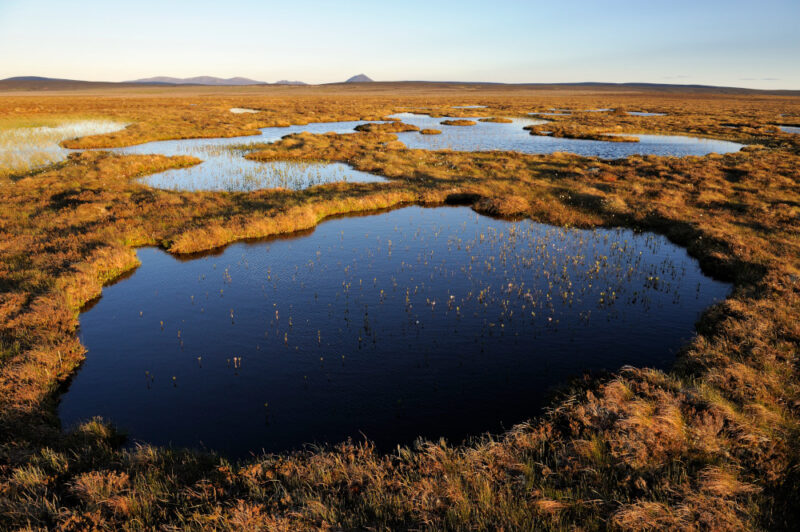
Often the perception of the Flow Country is of a flat and barren landscape, with miles upon miles of nothing to see. This could not be further from the truth! The Flow Country Partnership’s strapline of ‘The More You Look, the More You See’ aims to highlight the amazing diversity and complex processes that make up this spectacular peatland habitat. Under your feet, the building blocks of the peatlands, the sphagnum mosses have become perfectly adapted to survive in low oxygen, low nutrient and acidic conditions of the bog systems. The partial decay of the sphagnum along with other surrounding vegetation in the bog’s waterlogged, anaerobic conditions, result in the building of layers and layers of dead organic matter, eventually forming peat over thousands of years.
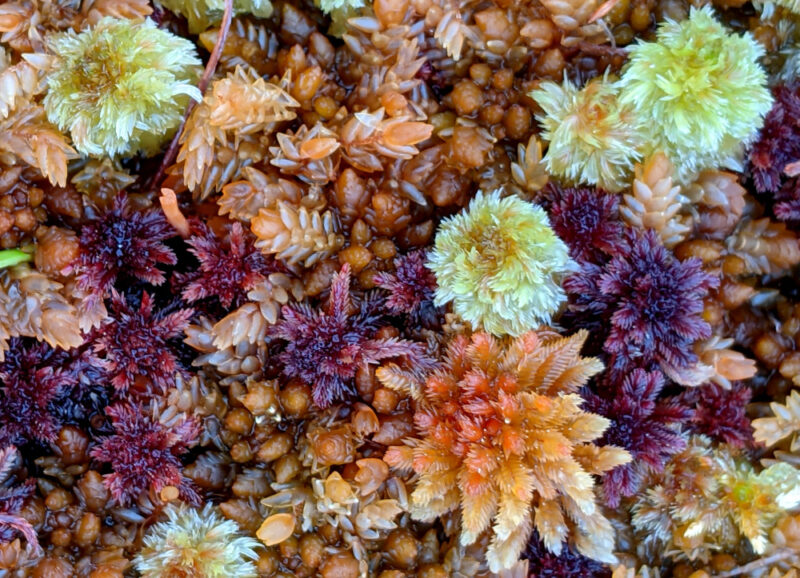
These unique conditions begin to support the establishment of the diverse blanket bog habitat that the Flow Country is renowned for. Along with the blanket bog, the varying climatic and geomorphological conditions of the Flow Country contributes to the establishment of heathland, grasslands, fen communities, pool systems, rivers and lochs that contribute the mosaic of different habitats of the entire Flow Country ecosystem. These habitats go on to support a rich and distinctive assemblage of plants, mammals, birds and insects that underpin the complex peatland processes.
As well as its world class quality of habitats and biodiversity, the Flow Country is also globally important for carbon sequestration and storage. The acidic and waterlogged conditions of the peatland slow down the decomposition of plants, with the dead biomass accumulating to form peat, locking this atmospheric carbon into the peatland deposits over thousands of years. This slow and continuous removal of CO2 from the atmosphere contributes to the global fight towards reduced carbon emissions and global warming. However, any degradation or drying out of the peatland allows this stored carbon to be released back into atmosphere as the process is reversed, highlighting the importance of protecting and restoring peatland habitats.
It is also important to note that the Flow Country is not an untouched wilderness, left in the hands of nature over the centuries. It is a living landscape with a complex history and rich cultural heritage that has shaped what we see today. The land has been influenced by people from prehistoric settlements to Highland Clearances, government funded commercial incentives, charity ownership, to the range of crofters, foresters, landowners, researchers, energy developers, tourists and residents today that all value the importance of the Flow Country. Human influence is not something that can or should be ignored in understanding the value of the Flow Country.
The Flow Country is a spectacular place to visit with its vast undulating landscape, shimmering bog pools, rivers and lochs, diverse wildlife, rich social and cultural history as well as the charming and bustling gateway towns and villages. The World Heritage Site looks to promote this fantastic site to visitors both close to home and further afield, educating them on the unique qualities of the peatland whilst always remaining true to the protection of the site. Our recently published Sustainable Tourism Strategy, that can be found on our website, provides a vision for how we manage tourism within the Flow Country, balancing the area as a visitor destination while promoting low-impact and meaningful visitation that encourages deeper engagement with the landscape, learning about the area and promoting stewardship for all who visit. This also looks to bring sustainable local benefits into the community, supporting local economies and providing opportunities for the surrounding towns and villages. We want to promote responsible access to this amazing landscape, encouraging people to experience what the Flow Country has to offer, but at the same time conveying the sensitivity of this world-renowned landscape, and the importance of protecting and conserving it.
There are many ways to responsibly immerse yourself in the Flow Country. Utilising the existing paths and tracks throughout the area allows you to experience the Flow Country whilst protecting the delicate peatland habitats and reduces the chances of being lost to the bog! Whether you’re after a short walk or a longer adventure, we have highlighted a few walks that provide the opportunity not only to explore the Flow Country, but to learn about this remarkable habitat and the wider landscape.
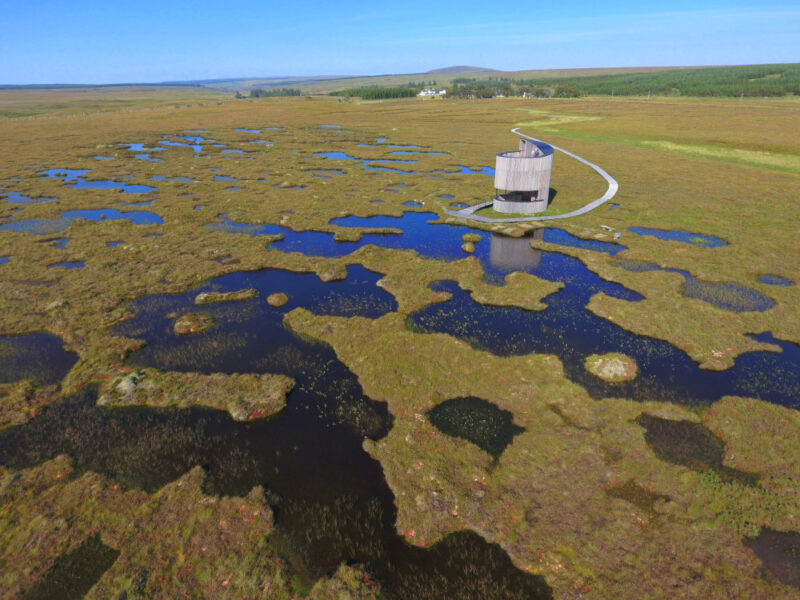
Forsinard Flows and Tower, Forsinard provides a short walk amongst the peatlands and lochans to a spectacular viewing tower, providing a bird’s eye view across the vast Flow Country. Make sure to stop off at the RSPB Forsinard Flows Visitor Centre before you go, housed in the railway station at Forsinard, for a delve into why these peatlands are so important. For those utilising public transport, the Far North Line, the most northernly train line in Scotland, includes a stop at Forsinard. Take the train north and view the Flow County in comfort, or south toward the coastal towns of Helmsdale, Golspie or in land to Lairg.
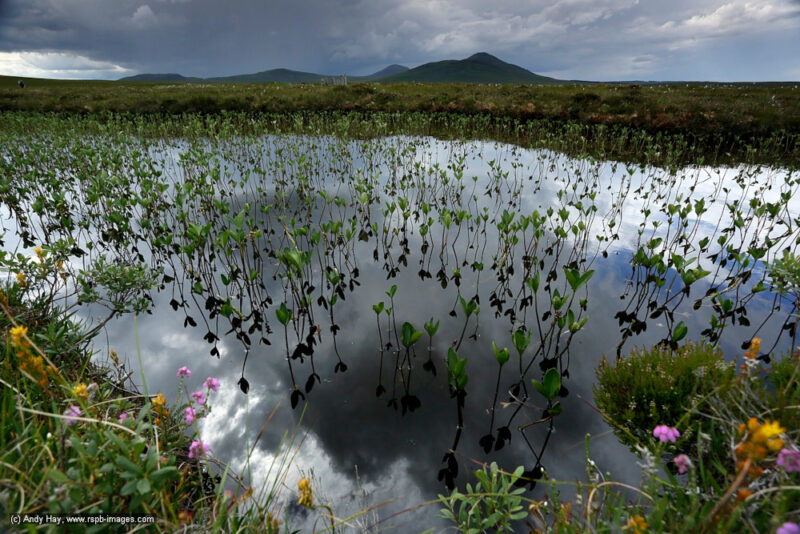
Forsinain Trail, Strath Halladale provides an immersive walk in the heart of the Flow Country, showcasing why this ecosystem is so special. Stop to marvel at the variation of habitats and array of animal life that are supported by the Flow Country. You might be lucky to spot rare birds that breed in the area such as curlew, dunlin, red-throated diver and hen harrier.
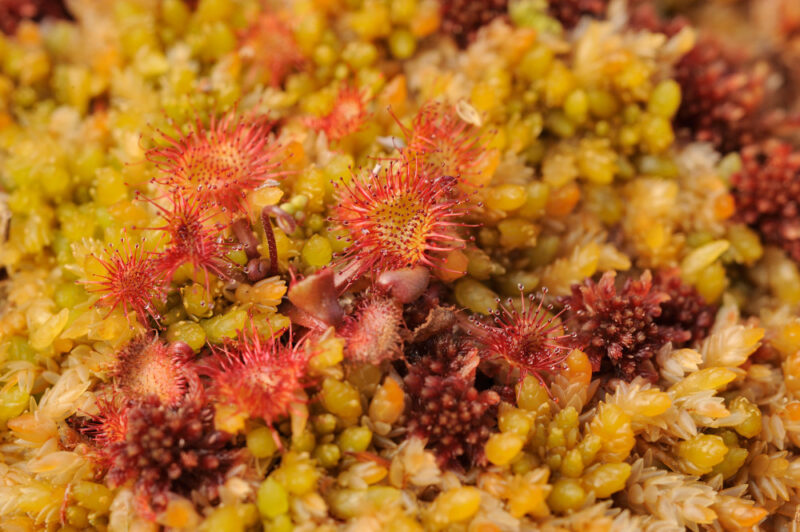
Munsary Peatlands Reserve, Achavanich, near Lybster offers a fantastic opportunity to see up-close the specialised plant species that have adapted perfectly to the peatlands. Spot the variety of sphagnum mosses, bog asphodel, bog orchid, cotton grasses and carnivorous sundews that all contribute to this outstanding ecosystem.
Looking further afield, explore and learn about the rich cultural and social history of the wider area with walks such as Rosal and the Strathnaver Clearances, Badbea – Clearance Village and Yarrows Archaeology Trail to name a few. Explore the hills of Caithness and Sutherland that provide fantastic views over the vast expanse of the Flow Country and beyond such as Ben Loyal, Ben Klibreck and Morven and Maiden Pap.
For those driving along the straths and roads throughout the Flow County, take time to stop at our viewpoints, perfectly positioned at various locations around the Flow Country. Learn about the peatlands, the flora and fauna and local history via the interpretation panels and enjoy a seat to admire the spectacular views over the peatlands, lochs, mountains and the vast landscapes of Flow Country. Find more information about these viewpoints on our website.
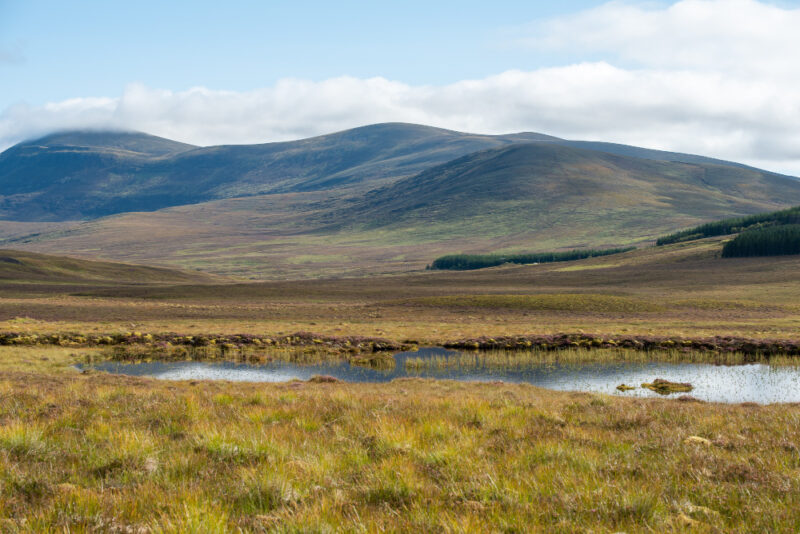
The Flow Country offers so much more than the perception of a flat and empty landscape. This vast area hosts an amazing variety of specialised plant and animals, complex peatland processes, contributes to the global fight against climate change and has supported the ever-changing way of life for local people over thousands of years. World Heritage status brings the Flow Country to the world stage, highlighting the importance of this ecosystem, helping connect people to the values of nature and enhancing the unique relationships we have with the land. However, this designation also requires every person to take responsibility for ensuring the outstanding qualities of this world class habitat are protected and preserved. So next time you are looking for adventure, think of stepping into the spectacular Flow Country, you’ll be amazed at what you see!
Find more information on the Flow Country and the World Heritage Site on our website – theflowcountry.org.uk.